
What The First Send Needs To Prove Before A Campaign Continues
A campaign can look ready in a spreadsheet and still fail in the first message a recipient sees.

Illustrative scene: the first saved message deserves a deliberate review.
In a recent outreach workflow, the first saved message showed an attachment the team had not intended to send. The remaining wave stopped. That is the useful part of the story: a launch plan needs a decision point after the first real send, while there is still time to correct the experience for everyone else.
Treat The First Send As A Release Check
The first message is where the plan meets the actual sending system. I want someone to inspect the saved message, not only the draft that looked right before sending.
The check is concrete. Is the sender name correct? Does the reply path go to the person who owns the conversation? Did an image become an attachment? Do links open the intended destination? Is the offer legible on a phone? Were the right people included and the excluded people left out?
The answers belong in a short release record. If the saved copy differs from the approved experience, pause the remaining wave and identify what changed.
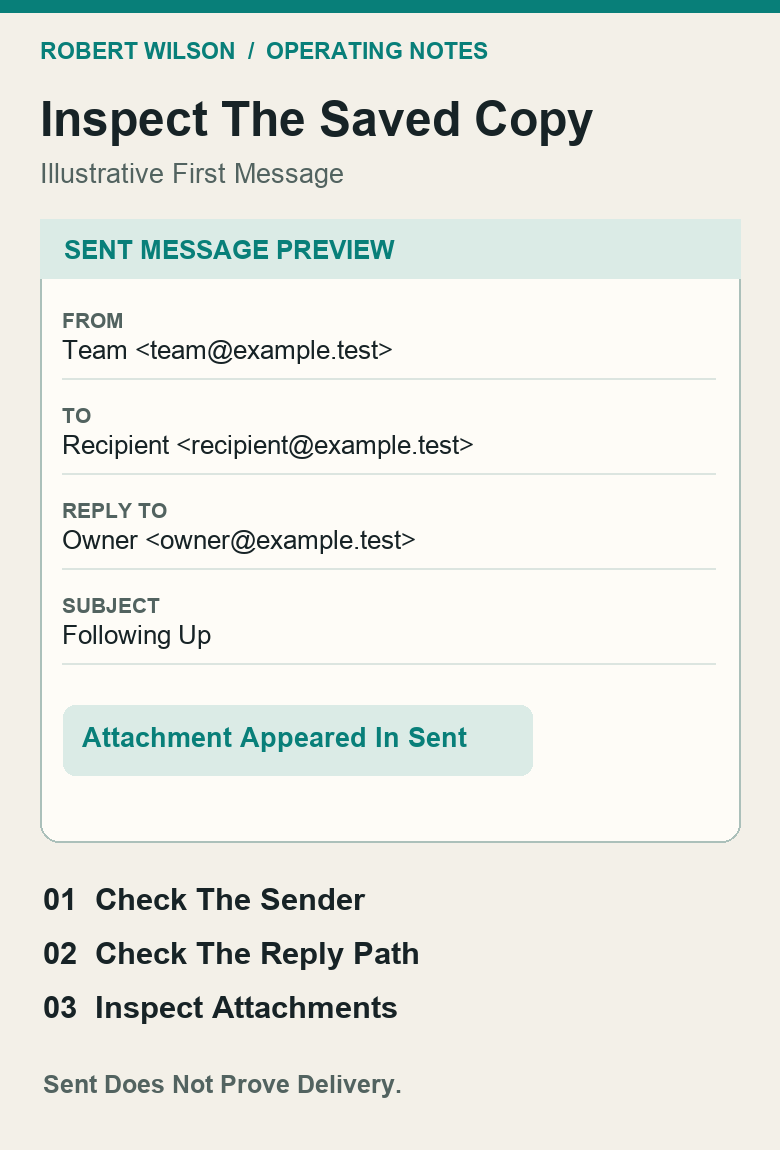
Inspect the saved copy, including the sender, reply path and attachments. A phone-optimized version is included with the review assets.
Give The Team Permission To Stop
“Send the rest unless somebody complains” is a weak launch rule. By the time a reply exposes the issue, the message may already be in many inboxes.
My preferred rule is simple: send the first authorized message, inspect its saved copy, and release the remainder only when the required checks pass. If one fails, stop, fix the source of the problem, and run another preflight. Record who approved the restart and which version was used.
That does not require a committee. It requires an owner and a visible decision. A campaign can move quickly when the team knows exactly what evidence is enough to continue.
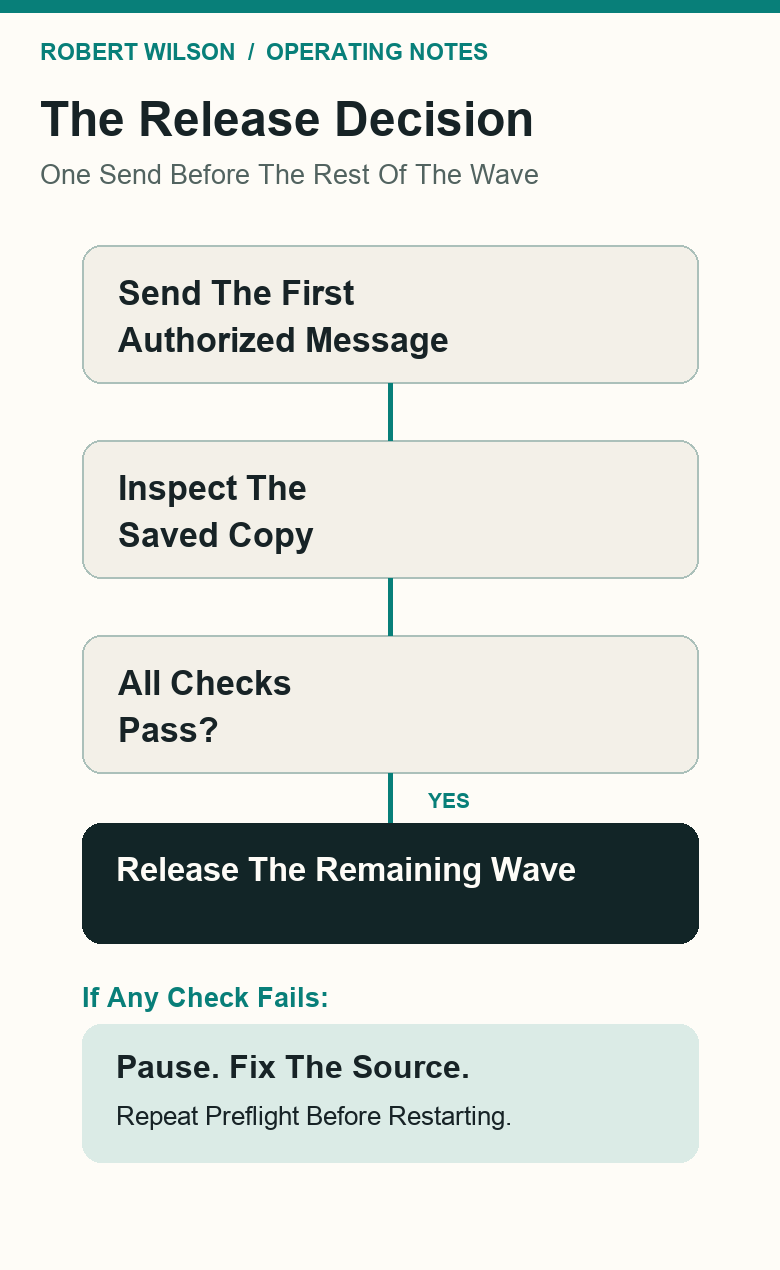
A failed check returns the campaign to preflight before anyone releases the remaining wave. A phone-optimized version is included with the review assets.
Separate Acceptance From Delivery
A message appearing in Sent shows that the sending account accepted it. It does not prove that the recipient received it, opened it or acted on it. Those are different stages with different evidence.
I would track them separately: released messages, delivery evidence when available, replies, exclusions and follow-up ownership. The first-send inspection protects presentation; subsequent monitoring tells the team what happened after release. A good report does not merge those stages into a single “done” number.
Make The Next Launch Easier
The best outcome of a stop is a better launch checklist, not a longer apology. Save the issue, the corrected version and the new check that would have caught it. The next team should inherit a usable release standard.
A first send should answer one question before a campaign scales: does the message people actually receive match the experience we meant to create?
If your team is building a campaign process that needs clear ownership from draft through follow-up, I would welcome the conversation at Robert Wilson HQ.