
What A Useful Quote Explains Before The Customer Has To Ask
A customer can put two starting prices next to each other. That does not mean they can compare the service.
One quote may include the work they expect, a defined service window and a person to call if the plan changes. Another may leave all of that to a later conversation. The numbers are visible. The difference in the experience is harder to see.
I have been thinking about this while working on service-business pricing explanations. The useful question is not simply, “Did we show a price?” It is, “Did we explain what the customer can expect around that price?”
The quote sheets below are fictional teaching examples. Their blank dollar fields are deliberate. They do not represent a client price or a measured sales result.

Begin With The Decision The Customer Is Making
Suppose a customer needs a service completed before another job can begin. They may be comparing providers, but they are also trying to reduce uncertainty. Will the requested work be included? Can the provider meet the needed window? What happens if the job changes? Who will answer the next question?
A single starting price answers none of those questions. It may be the first thing the buyer sees, but it should not be the only thing they can compare.
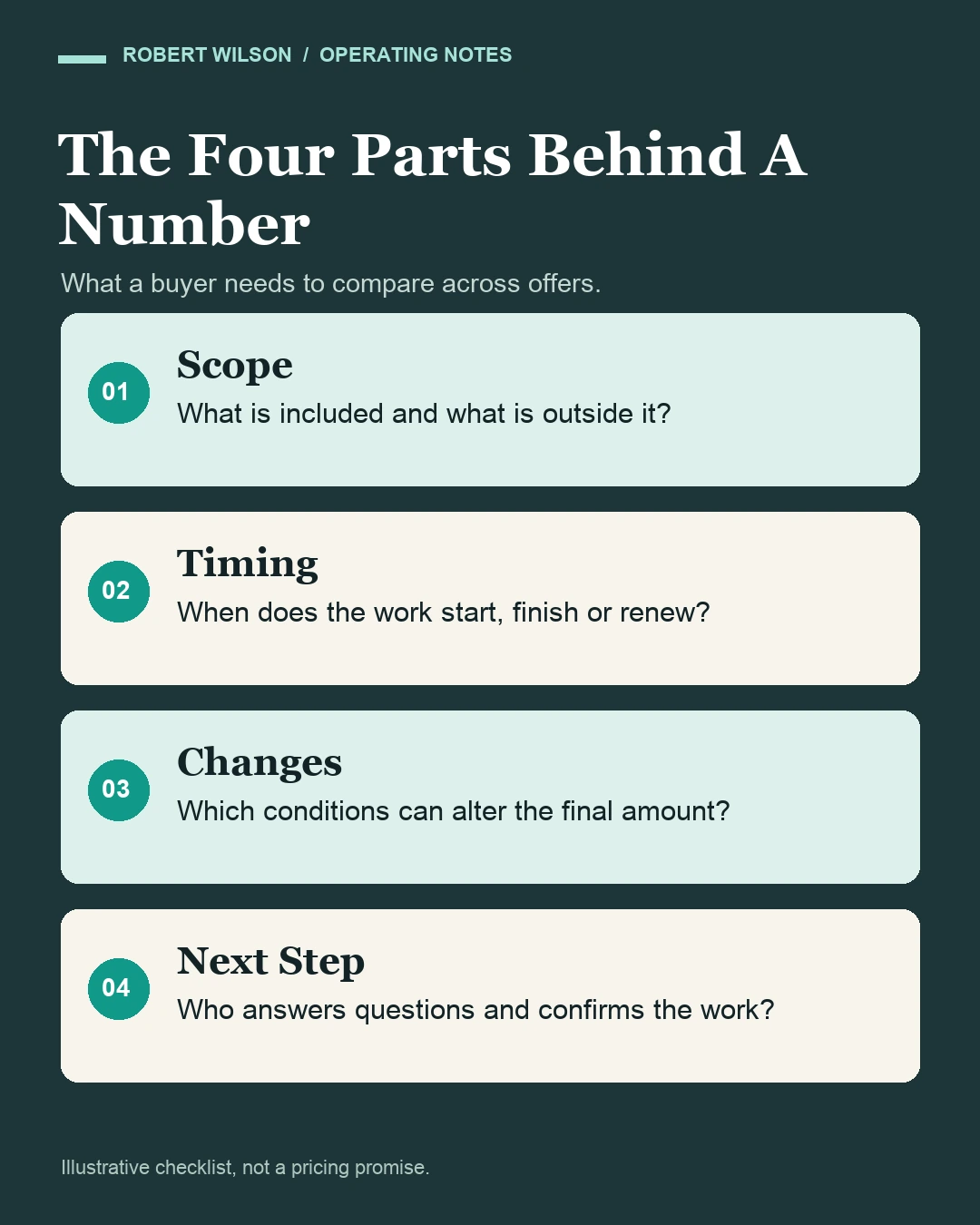
I would organize a quote around four answers: scope, timing, changes and next step. Those labels sound simple. Each one prevents a different misunderstanding.
Show The Work Inside The Number
Scope means naming the service, the included work and the boundary. “Site preparation” is a category. “Prepare the agreed work area and remove the listed material” is closer to something the buyer can check. If a permit, additional material or another visit is outside the quote, say so in plain language.
The point is not to bury the customer in exclusions. It is to help both sides agree on what is being bought. A salesperson should be able to talk through the same scope that appears in the document.
Timing means more than a promise to be responsive. Give the proposed service window, the point at which it can be confirmed, and the information needed before work begins. If timing depends on site access or a third-party approval, identify that dependency. A customer may value a reliable sequence more than an unsupported fast promise.
Explain What Could Change
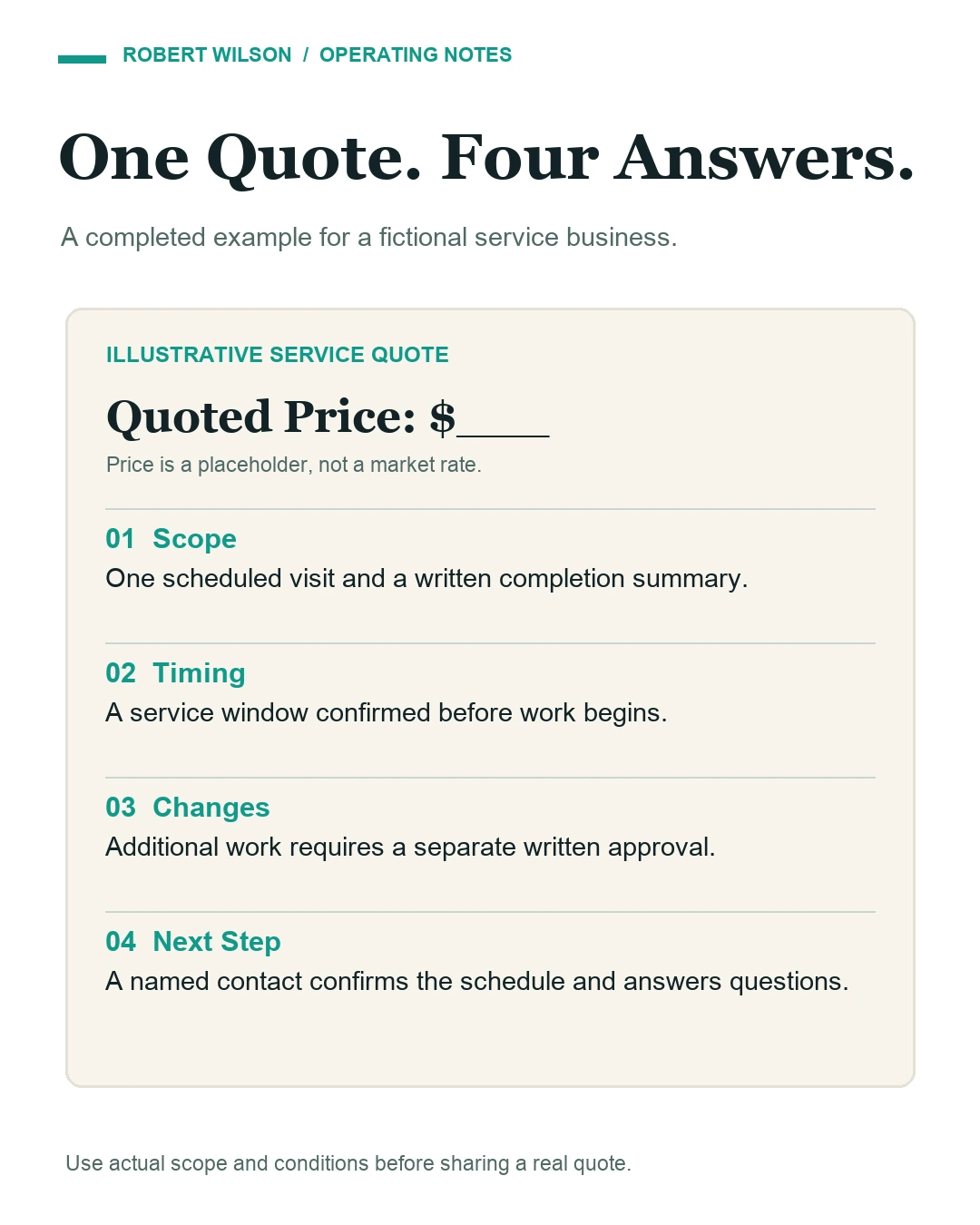
A useful quote describes the conditions under which the amount or work could change, and who approves that change. For example, an illustrative field-service quote might say that additional work discovered on site will be described and approved before it begins. That is clearer than a vague “additional charges may apply.”
The language must fit the actual business and contract. The example below is a writing model, not terms to paste into a real quote. Notice that the price remains blank while the decision-critical details are visible.
Make The Next Step Easy To Find
The last field is often treated like a formality. It should tell the customer what happens after they receive the quote. Do they approve it, schedule a site visit, confirm a date, or ask a question? Who receives that response? When should they expect a reply?
Without a named next step, a good explanation can still end in a stall. A customer should not have to search an email chain to learn who owns the follow-up.
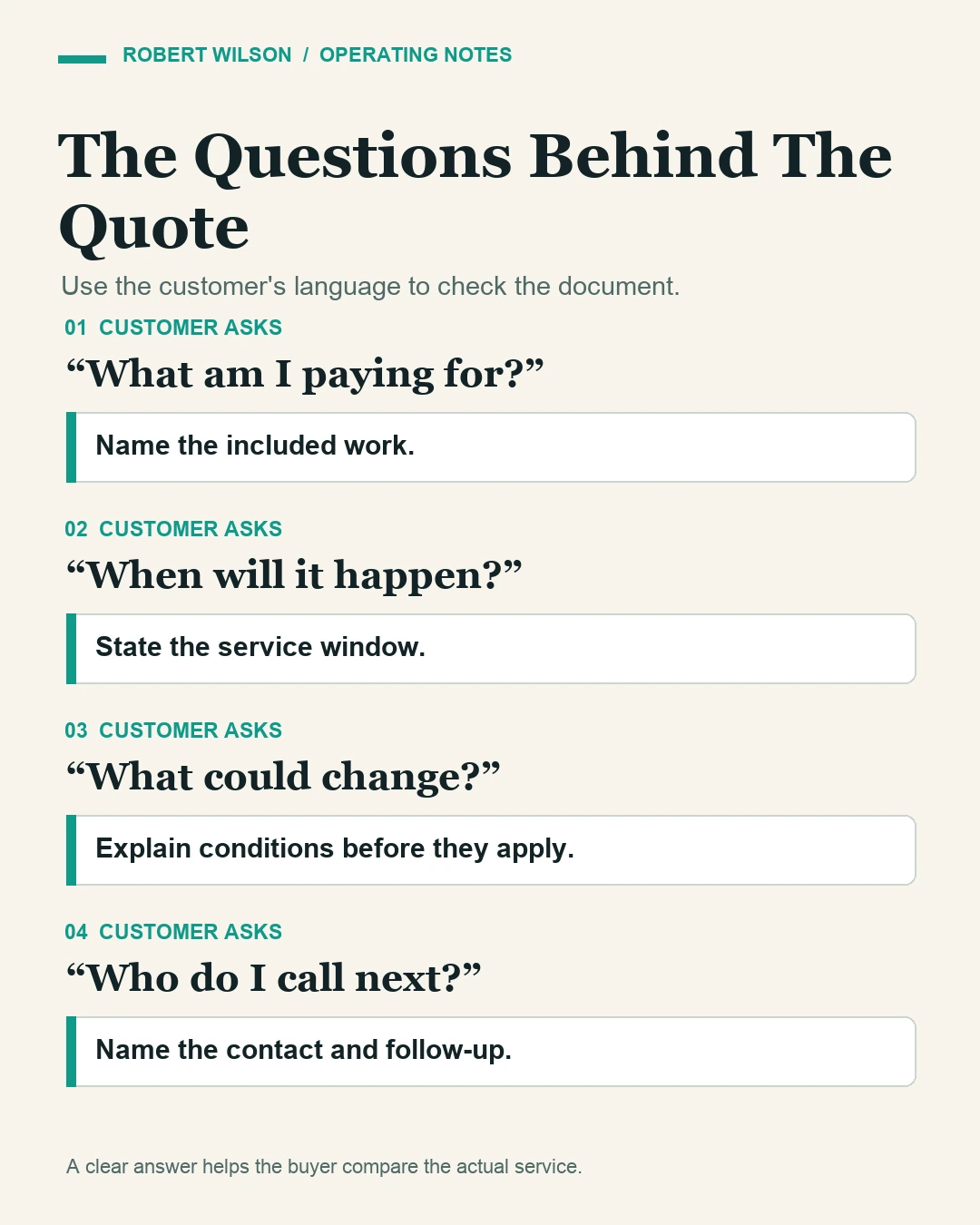
Here is how I would test the whole document. Read it as the buyer and ask:
- What Am I Paying For? The scope and included work should answer.
- When Will It Happen? The service window and dependencies should answer.
- What Could Change? The conditions and approval process should answer.
- Who Do I Contact Next? A named next action and contact should answer.
Use The Quote As A Conversation Tool
The written quote and the sales conversation should help each other. A good document gives the salesperson a clear way to explain the offer. A good conversation reveals where the document still leaves questions open.
If customers keep asking whether a particular step is included, that is feedback about the quote. If they routinely ask what happens after approval, the next-step section needs work. The goal is not to eliminate every question. It is to spend the conversation on the customer’s real decision instead of recovering missing basics.
I would also avoid pretending that a more detailed quote is automatically the better offer. Scope and conditions must be accurate, relevant and easy to find. A long document can hide uncertainty just as easily as a short one. The test is whether the buyer can make a more informed comparison.
Price begins the conversation. Scope, timing, change conditions and the next step help the customer understand the commitment. That is the comparison I want a quote to support.
If you are working through how marketing and sales explain a complex service, let’s talk.