
Why A Forecast Needs An Untouched Starting Point
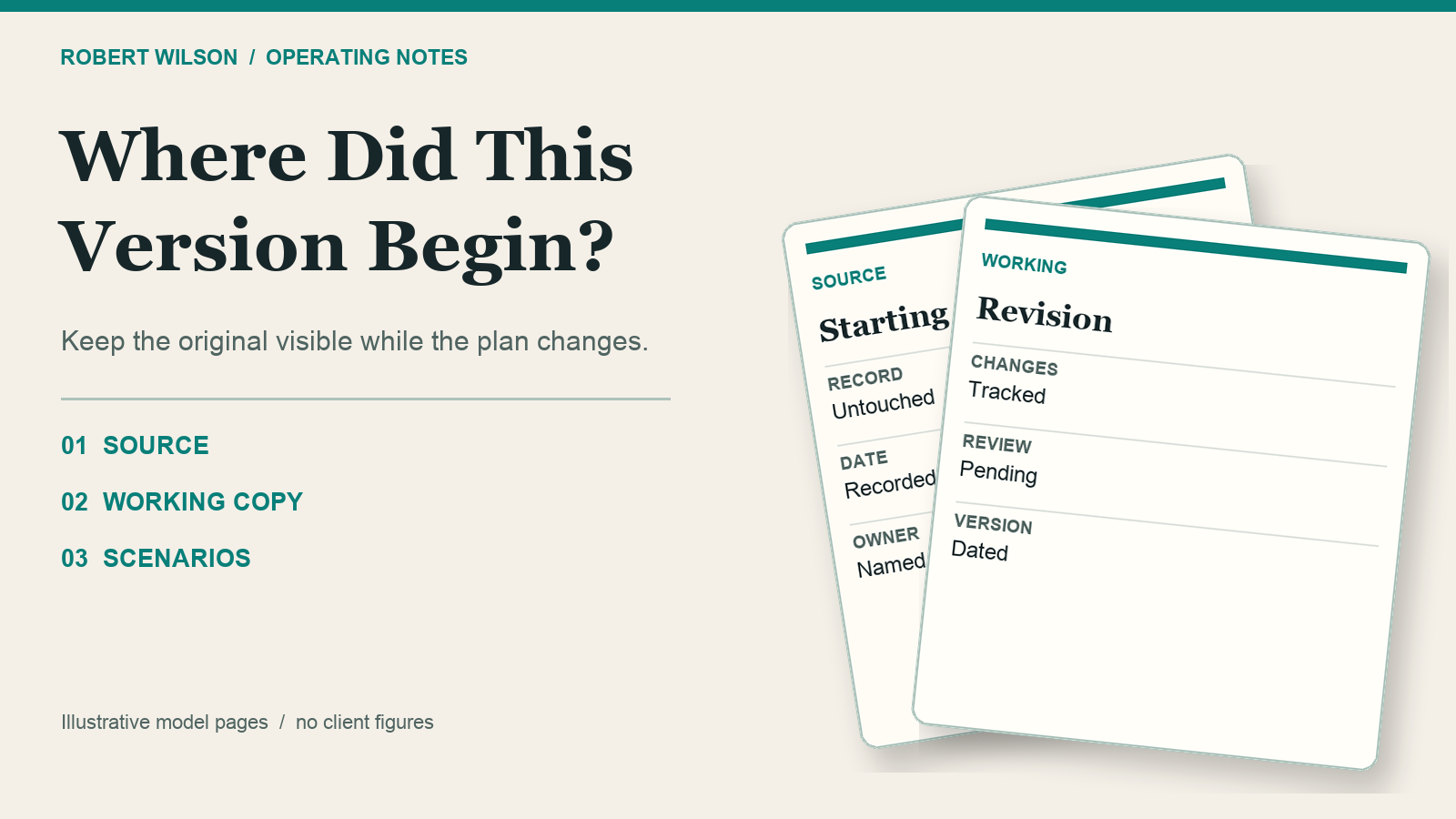
Keep the starting file visible while the working plan changes.
When a forecast changes, I want to know which file shows the starting point before anyone revised the plan.
That sounds obvious until there are several plausible “originals”: an older historical sheet, a working copy and the source workbook that existed just before the new scenarios were built. They answer different questions. In a recent model review, we had to establish which file was truly the pre-edit source and compare it with the working version.
Keep The Source Separate From The Work
I treat the starting model as a record, not a workspace. It should stay untouched, with its source, date and owner clear enough for someone else to find it. Revisions happen in a working copy. Scenario tabs branch from that working copy and carry their own assumptions.
The labels matter. “Historical” tells me a file describes an earlier period. “Original” should tell me it is the actual source before this round of edits. One cannot substitute for the other just because it has an earlier date.
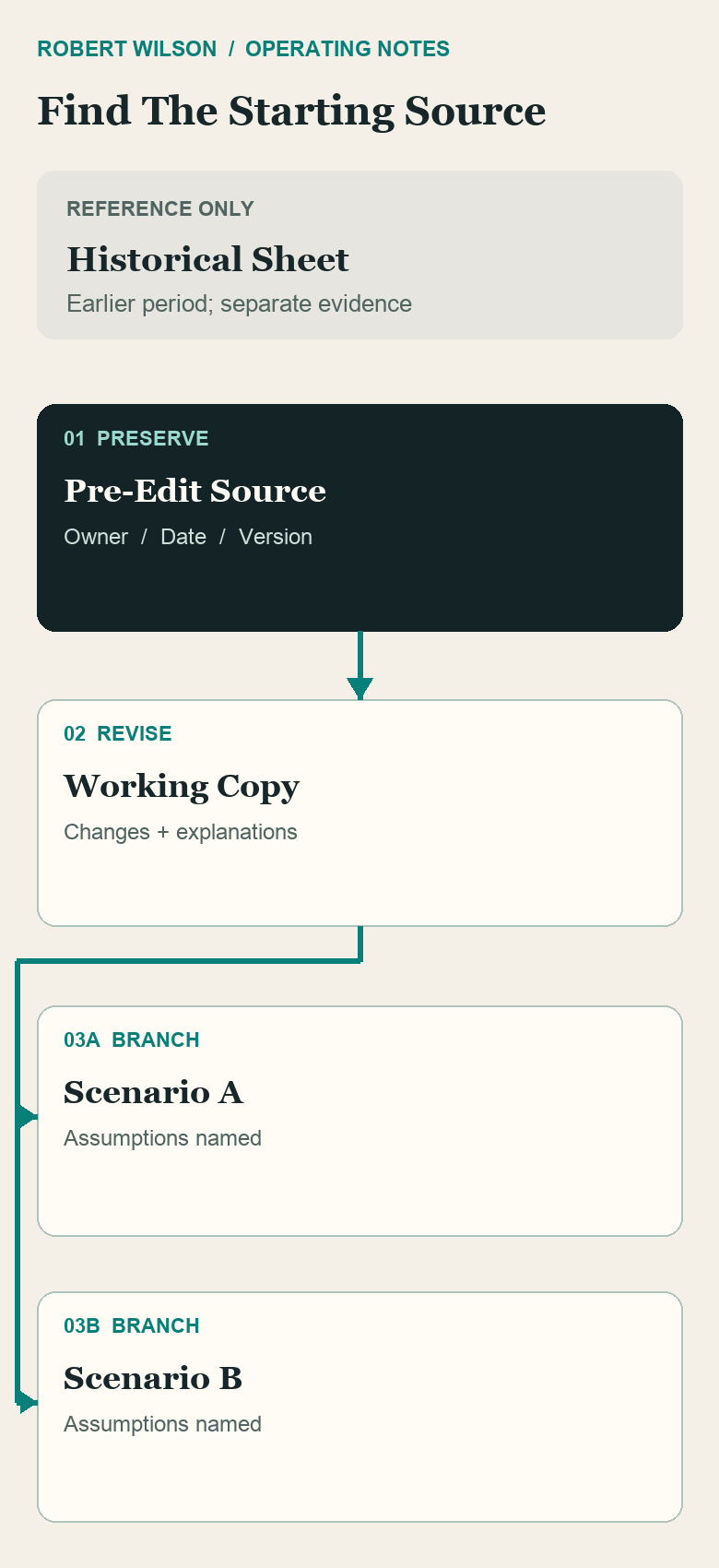
The historical sheet is separate evidence. Both scenarios branch from the working copy.
Compare The Parts That Can Change The Answer
A visual comparison of two summary pages is not enough. I want to check formulas, references, definitions and period labels in the cells that drive the story. If a scenario uses a new assumption, the narrative and graphics should name that assumption rather than presenting it as an observed result.
For example, imagine a service business comparing a baseline staffing plan with a second scenario. The numbers are intentionally omitted here. The review would ask whether both sheets define capacity the same way, whether the period is monthly or annual and whether a changed staffing assumption appears in the written explanation. Those definitions let the team trace how the decision changed.
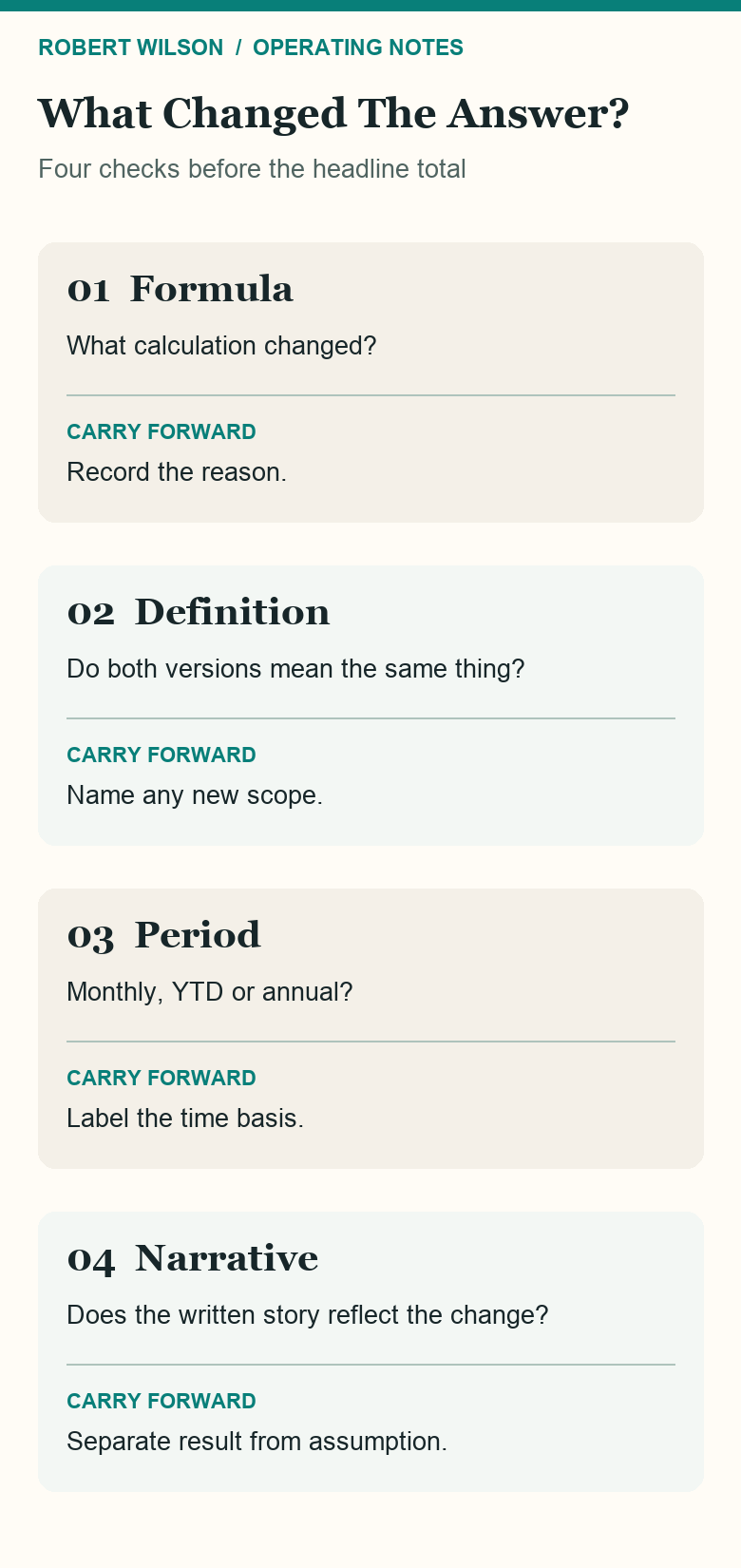
Compare the parts that drive the conclusion before presenting a headline total.
Make The Version Path Visible
My simplest version map has three layers:
- Starting source: the untouched file received before this round of work.
- Working copy: the place where corrections, reconciliations and explanations are made.
- Scenarios: clearly named alternatives that branch from the working copy.
An arrow between layers means “derived from,” not “more accurate than.” Each branch needs a date and a reason for the change. If the true starting source is unavailable, I would label the gap instead of promoting the oldest file I can find to “original.”
Let The Model Support A Better Conversation
I ask what changed, why it changed, and which decisions depend on it. An untouched starting point lets a team answer without reconstructing the work from memory.
That discipline also makes a buyer presentation, operating plan or leadership discussion more honest. Readers can see actual results, working assumptions and possible outcomes as distinct things.
If you are trying to turn a complicated model into a decision people can follow, I would welcome the conversation at Robert Wilson HQ.